Built By Pressure PodcastWhere experience becomes direction.
Unfiltered conversations and practical direction for people turning hard seasons into stronger lives.
Explore the studio footage below while the next live conversation is being prepared.
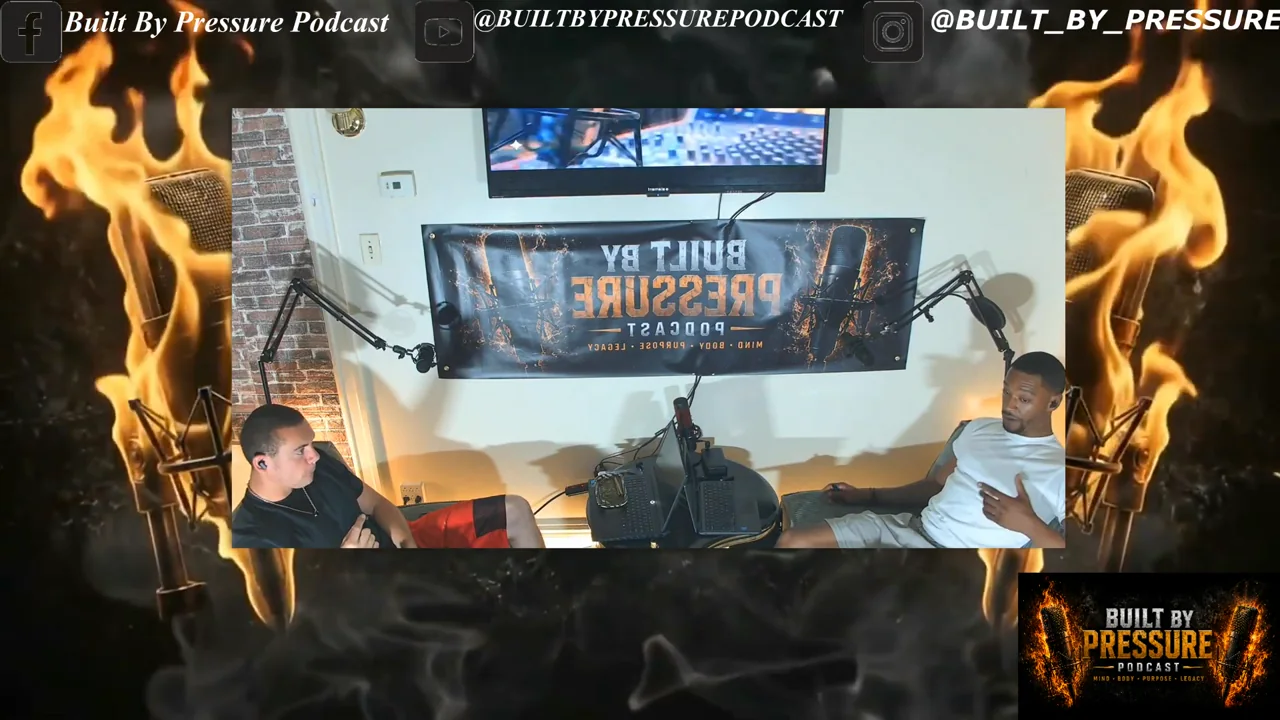
There is no live broadcast right now. Watch the available studio footage and read our guide to putting pressure to work.
Watch studio footageReal moments from the studio, the setup, and the conversations behind the finished episode.
Short, useful guidance grounded in lived experience—not empty motivation.
Discipline, emotional control, self-respect, and the thinking required to change direction.
Explore mind →Training, recovery, confidence, and daily habits that create physical momentum.
Explore body →Turning what you survived into work, direction, and a reason to keep building.
Explore purpose →Creating something that lasts longer than attention, trends, or one successful season.
Explore legacy →Pressure can make every problem feel urgent. A setback at work, a rejection, an argument, or an unexpected bill may leave you trying to solve your entire future in one night. Start smaller. The aim is to separate what happened from the story your fear tells about it, then choose one action you can actually take.
Write down the facts in one or two sentences: “I was turned down for the position,” or “I missed a payment.” Then write down the interpretation separately: “I will never get ahead.” The first sentence describes an event. The second is a prediction. You can take the event seriously without treating the prediction as certain.
Draw two columns: what you can influence and what you cannot. You may not control another person’s decision, but you can ask for feedback, revise an application, make a payment plan, or get some rest before deciding. Pick one concrete action that fits your time and resources. If the action is too large to start today, reduce it until it can be done in fifteen minutes.
A hard day is a poor time to demand a complete transformation from yourself. Eat something, drink water, move your body in a way you can manage, and protect your sleep where possible. These basics will not erase a problem, but they can give you a steadier position from which to address it. Ask a trusted person for support when the load is too heavy to carry alone.
At the end of the day, note what happened, what helped, what made things harder, and the next step. Revisit the notes in a week. This is how a difficult season can teach you something specific: which habits hold up, which boundaries need work, and where you need help. You do not have to celebrate the hardship to learn from it.
Try this now: Finish this sentence: “In the next 24 hours, I will ____ for 15 minutes.” Choose something observable, such as sending one email, taking a walk, or outlining a conversation. When it is done, decide the next step from where you actually stand.
Full behind-the-scenes cuts, early episode access, private guidance drops, and community conversations in one place.
We are shaping private and small-group conversations about pressure, discipline, and rebuilding. Scheduling is not open yet; session descriptions are a preview of what we are planning.